
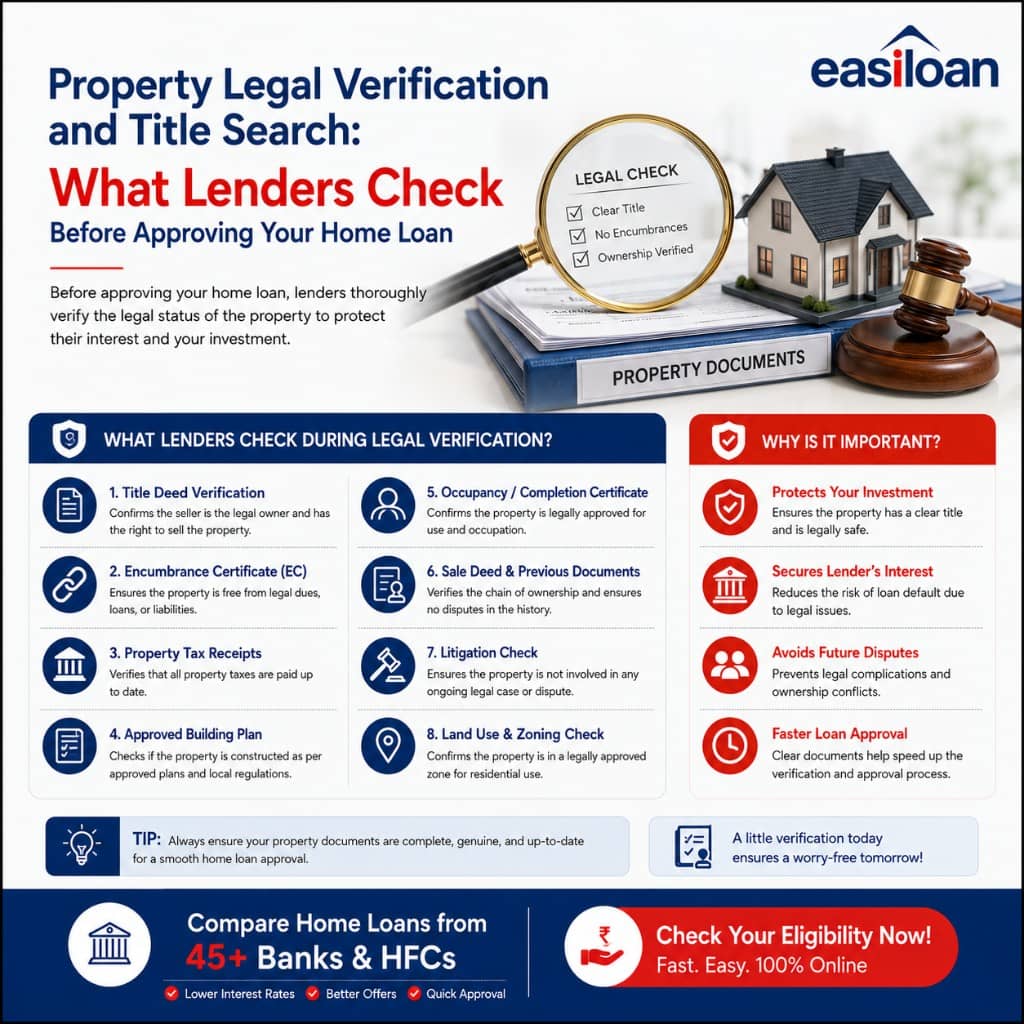
Why Legal Verification Happens
A home loan is secured against the property itself, which means the lender needs certainty that the title is clear, the seller has the legal right to sell, and there are no competing claims or encumbrances. This protects both the lender's security and your ownership once the loan is repaid.
Documents Reviewed During Title Search
- Chain of title documents — typically going back 12–30 years depending on the lender and state
- Sale deed, gift deed, or partition deed establishing the current owner's rights
- Encumbrance certificate confirming the property is free of registered liabilities
- Property tax receipts showing dues are cleared
- Approved building plan and occupancy/completion certificate for constructed properties
- Society share certificate and NOC, for apartments
- RERA registration details, for under-construction projects
What a Lawyer or Empanelled Advocate Checks
Lenders typically engage an empanelled lawyer to prepare a legal opinion on the property. This includes verifying the seller's ownership history, checking for pending litigation, confirming there are no unpaid loans registered against the property (via encumbrance certificate), and ensuring all necessary government approvals are in place. The lawyer's report directly influences whether and how much the lender is willing to finance.
Common Red Flags That Can Delay Approval
- Breaks in the chain of ownership documents, especially for older or inherited properties
- Property built without proper municipal approval or deviating from the sanctioned plan
- Disputes among co-owners or pending litigation
- Agricultural land not converted for residential use
- Missing occupancy certificate for a completed building
- Mismatched survey numbers or boundary discrepancies
Any of these can lead to a lower loan amount, additional conditions, or in some cases a decline, until the issue is resolved.
Technical Valuation Alongside Legal Checks
Separately from the legal opinion, the lender also commissions a technical valuation to assess the property's market value and construction quality. Your loan amount is capped based on the lower of the agreement value or this assessed value, which is why an unusually high purchase price relative to the area's market rate can affect how much financing you're able to secure.
Frequently Asked Questions
How far back does a title search typically go?▾
This varies by lender and state, but 12 to 30 years of ownership history is a common range used to establish a clean chain of title.
Who pays for the legal verification and valuation?▾
This is usually covered through processing or legal/technical fees charged by the lender, though the exact fee structure varies by institution.
What happens if my property has a legal issue?▾
Depending on the severity, the lender may ask the seller to resolve the issue before sanction, offer a reduced loan amount, or decline financing for that specific property.
Is legal verification needed for under-construction properties too?▾
Yes — for under-construction projects, lenders also verify the builder's approvals, RERA registration, and land title before agreeing to finance, in addition to reviewing the individual buyer's allotment.
Can EasiLoan help if my property has documentation gaps?▾
EasiLoan's advisory team can flag common documentation gaps early and guide you toward lenders whose requirements are a better fit for your specific property situation.
Disclaimer: EasiLoan is a home loan advisory and comparison platform, not a direct lender. Information on this page is for general guidance only and does not constitute financial advice. Loan approval, interest rates, and documentation requirements vary by lender and are subject to individual eligibility and lender policy. Please consult an EasiLoan advisor or your chosen lender for details specific to your application.