
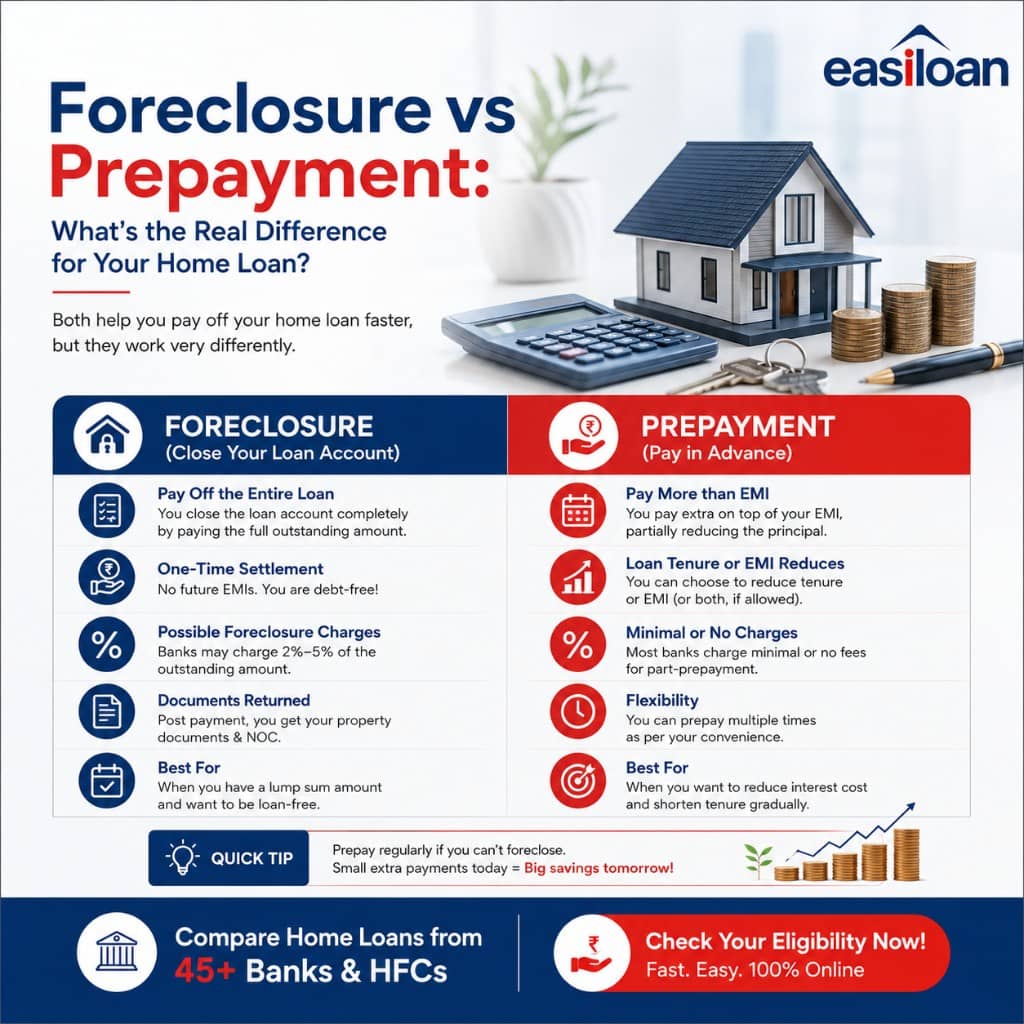
Definitions: What's the Actual Difference
Prepayment refers to paying an extra amount toward your loan principal, over and above your regular EMI, while the loan continues — either reducing your EMI or shortening your remaining tenure. Foreclosure means paying off the entire outstanding loan balance in one go, fully closing the loan before its scheduled end date. Prepayment is partial and ongoing; foreclosure is complete and final.
RBI Rules on Prepayment Charges
RBI guidelines require that floating-rate home loans to individual borrowers cannot carry foreclosure or prepayment charges, regardless of the source of funds used to prepay. This applies specifically to individual borrowers on floating-rate loans; fixed-rate loans, and loans to non-individual entities, may still attract prepayment or foreclosure charges depending on the lender's policy — always check your specific loan agreement.
When Prepayment Makes Sense
- You've received a bonus, inheritance, or lump sum and want to reduce interest cost without fully depleting your liquidity.
- You want to shorten your tenure while keeping some monthly cash flow flexibility.
- You're early in the loan tenure, when the interest component of each EMI is highest — prepaying early saves more total interest than prepaying later.
When Foreclosure Makes Sense
- You have enough surplus funds to clear the entire outstanding balance and prefer being debt-free over investing that amount elsewhere.
- You're refinancing to another lender at a significantly better rate (technically a foreclosure of the old loan).
- You're selling the property and need to clear the loan to obtain a clear title for the buyer.
Before foreclosing, compare the interest you'd save against the potential returns from investing that same lump sum elsewhere — especially since home loan interest rates are often lower than the annualized return of several other investment options.
Impact on Credit Score & Tenure
Both prepayment and foreclosure, when done without missed payments, are generally viewed positively by credit bureaus, as they reduce your outstanding debt burden. Foreclosing a loan closes the credit line entirely, which can marginally affect your credit mix and average account age — but this is usually a minor and short-lived effect compared to the benefit of reduced debt.
Process for Each
| Step | Prepayment | Foreclosure |
|---|---|---|
| 1 | Submit prepayment request with amount | Request foreclosure statement/quote from lender |
| 2 | Choose EMI reduction or tenure reduction | Pay the full outstanding amount |
| 3 | Lender adjusts amortization schedule | Lender issues loan closure/NOC document |
| 4 | Continue with revised EMI/tenure | Collect original property documents held by lender |
Frequently Asked Questions
Are there charges for prepaying a floating-rate home loan?▾
No. RBI guidelines prohibit lenders from charging foreclosure or prepayment penalties on floating-rate home loans to individual borrowers, regardless of the funding source used for prepayment.
Should I choose EMI reduction or tenure reduction after prepaying?▾
Tenure reduction generally saves more total interest over the loan's life, since it shortens the period over which interest accrues. EMI reduction improves monthly cash flow but saves less total interest — the right choice depends on your financial priorities.
Is it better to prepay early in the loan or later?▾
Prepaying early in the tenure saves more total interest, because a larger portion of your EMI in the early years goes toward interest rather than principal. The interest-saving benefit of prepayment diminishes as the loan matures.
What documents do I get back after foreclosing a home loan?▾
After foreclosure, the lender issues a loan closure letter or No Objection Certificate (NOC) and returns the original property documents that were held as security, along with removing any lien or charge registered against the property.
Disclaimer: EasiLoan is a home loan advisory and comparison platform, not a bank or NBFC. We do not lend directly. Interest rates, eligibility criteria, and scheme terms mentioned above are indicative, sourced from public/lender data, and subject to change at the discretion of respective lenders and government authorities. Please verify current terms with your chosen lender or the official scheme portal before making financial decisions.